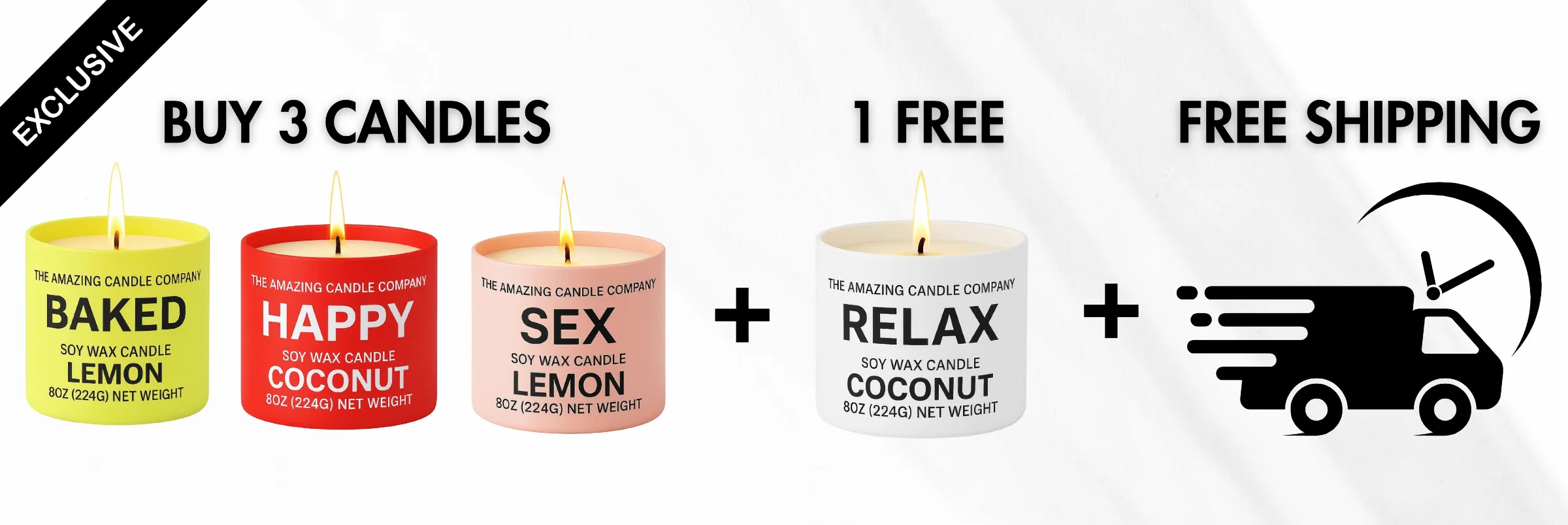
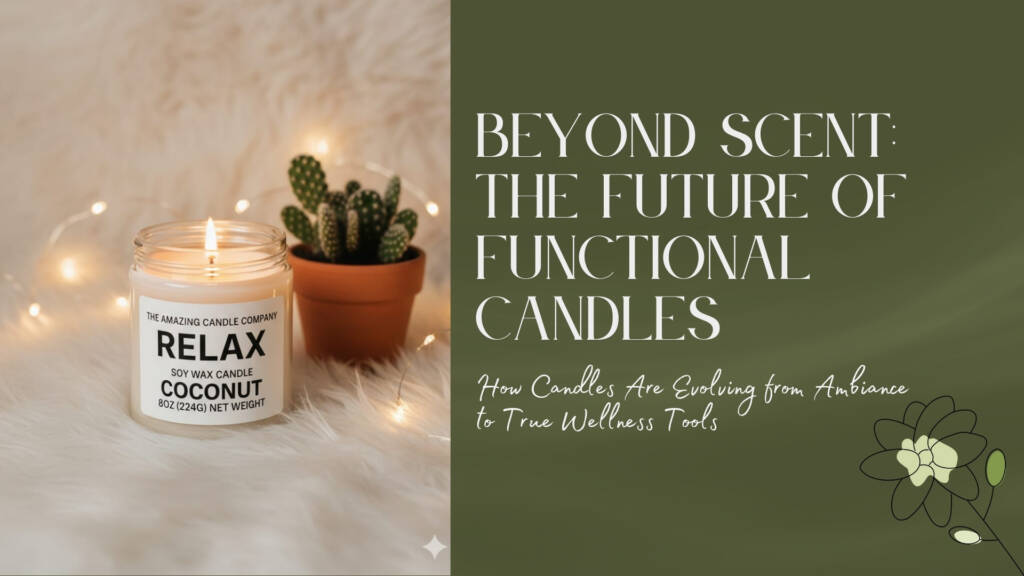
Candles used to be simple: light a wick, enjoy a scent, and bask in a little pool of warm glow. But over the past decade something quietly radical has been happening in the world of wax, wicks, and fragrance oils. Candles are shedding their one-note role as mere mood-setters and moving toward a place where they actively do something for the user — supporting sleep, focus, intimacy, energy, and even measured states of emotional or physiological change. Welcome to the era of the functional candle: thoughtful formulations, intentional ingredients, and product design aimed at shifting the body and mind as reliably as a yoga class or a cuppa tea.
This long-form essay explores that evolution — what functional candles are, why they matter, how they work (and don’t), the safety and ethical questions they raise, and where the category is going next. If you’re a candle lover, a wellness brand, or just curious about how a humble flame became a micro-ritual for modern life, read on.
What is a “functional candle”?
At its core, a functional candle still contains wax, a wick, and fragrance. What differentiates it from a classic scented candle is intent and formulation: functional candles are made to elicit a specific effect beyond pleasant aroma. That effect can be emotional (calming anxiety, boosting mood), physiological (promoting sleep, easing minor discomfort), cognitive (improving focus), or relational (enhancing intimacy or connection).
Functional candles combine several elements to produce an outcome:
- Targeted scent design: Blends that are engineered to nudge moods via olfaction (e.g., lavender for relaxation, citrus for alertness).
- Active non-fragrance ingredients: These may include essential oils at therapeutic levels, adaptogens infused into wax, CBD or hemp extracts (where legal and compliant), pheromone-like compounds (carefully formulated to avoid misleading claims), or botanical extracts intended to support a particular state.
- Therapeutic ritualization: Instructions, packaging, and ritual cues (lighting at a certain time, using in conjunction with breathing exercises) that help the user commit to an experience — the psychology of ritual enhances any functional intent.
- Delivery mechanics: Slow-release wax formulas, layered scents that evolve over burn time, and wick/wax combinations that maximize aromatic consistency.
Importantly: while functional candles can be powerful mood tools, they are not medical devices. They should be seen as complementary lifestyle tools — supportive, not curative.
Why now? Cultural and technological drivers
Several converging forces pushed candles into this new role:
- Rise of intentional self-care. Wellness culture reframed everyday items as tools in a behavioral stack. Lighting a candle became part of a larger practice — a cue to pause, to breathe, or to prepare for rest.
- Aromatherapy mainstreaming. As interest in essential oils and scent science grew, consumers became more aware that smells influence mood and cognition. That awareness opened demand for products that specified what they do, not just how they smell.
- Ingredient innovation. Advances in extraction, formulation, and legally compliant use of botanicals, terpenes, and cannabinoids expanded the ingredient palette. Manufacturers can now include nuanced actives in stable wax matrices.
- Design-forward commerce. D2C brands discovered that lifestyle positioning sells: beautiful packaging + clear functional claims = products that fit into daily routines and Instagram feeds alike.
- Personalization and niche markets. Consumers sought products tailored to very specific needs — sleep, study, social lubricants, mood boosts — so brands responded with targeted SKUs and micro-collections.
How functional candles (can) work: science + ritual
There are two main levers through which a candle can alter experience: physiology via olfaction and psychology via ritual.
Olfactory pathways
The olfactory system has direct connections to brain areas involved in memory and emotion (like the limbic system). Certain scent molecules — linalool and linalyl acetate in lavender, limonene in citrus — have been associated in studies with relaxation or alertness. Functional candles harness these associations by using higher-quality essential oils, specific aromatic blends, and sometimes isolated terpenes to achieve a targeted scent profile.
Two cautions:
- Dose matters. A faint scent may do nothing; too high a concentration can be irritating.
- Individual variability. Scent responses are personal. A smell that calms one person may evoke negative memories for another.
Ritual and expectation
Ritual is an underappreciated technology. The simple act of lighting a candle can function as a behavioral anchor — the beginning of a predictable, comforting sequence. Brands that instruct the user (e.g., “Light 30 minutes before bed, dim lights, breathe 4–6 breaths”) amplify the effect by combining scent with practiced behavior. Expectation and attention amplify the physiological response: if you light a candle believing it will help you sleep, the odds are higher that it will.
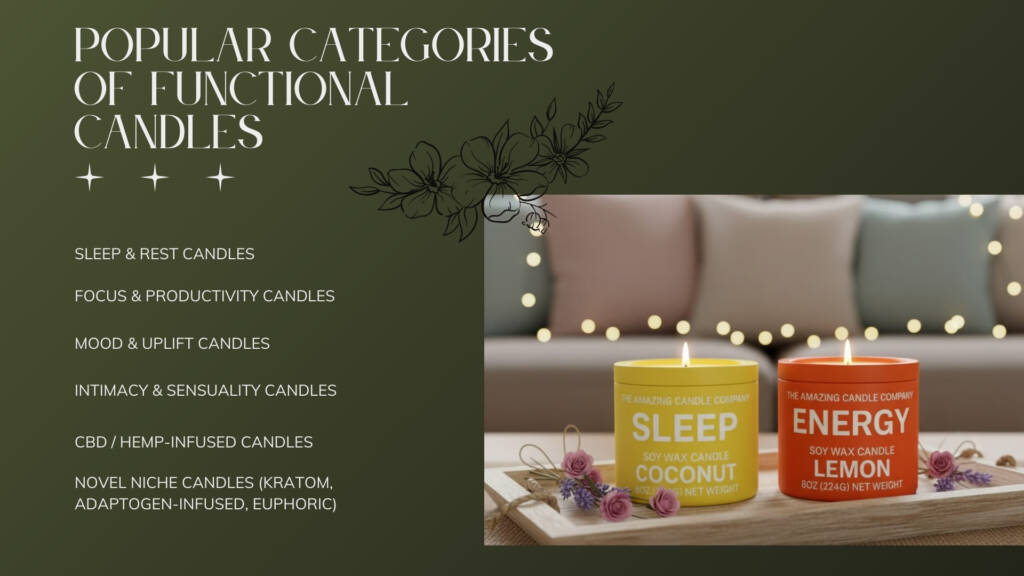
Popular categories of functional candles (and what to expect)
Below are categories you’ll see on shelves and why people buy them.
Sleep & Rest Candles
Formulation: lavender, vetiver, chamomile, certain terpenes; sometimes CBD or melatonin is mentioned in marketing (note legal/regulatory variance).
Intent: quiet the mind, signal bedtime, reduce sleep latency.
What to expect: a relaxing ritual that may help with the transition to sleep, especially when paired with a wind-down routine. Not a replacement for medical treatment of insomnia.
Focus & Productivity Candles
Formulation: rosemary, rosemary-camphor blends, eucalyptus, subtle citrus, low levels of stimulating terpenes.
Intent: sharpen attention and presence for short work or study sessions.
What to expect: a scent that feels “clean” and energizing. Works best in short sessions and paired with focused work blocks.
Mood & Uplift Candles
Formulation: bright citrus, uplifting floral-musks, blended with mood-supportive essential oils.
Intent: quick mood lift or pick-me-up during a sluggish afternoon.
What to expect: an immediate subjective boost; ideally used with micro-habits like movement breaks or sunlight exposure.
Intimacy & Sensuality Candles
Formulation: warm, slow-burning scents with amber, vanilla, ylang-ylang, or pheromone-adjacent woody notes; some use skin-safe oils for intimacy candles intended to be poured into massage oil (requires clear labeling).
Intent: create a warm, sensual atmosphere; in some product lines, to be used as a massage oil once cooled (requires formulation to be skin-safe).
What to expect: enhanced atmosphere and ritual; if skin use is advertised, check for dermatologist guidance and clear safety testing.
CBD / Hemp-Infused Candles
Formulation: hemp-derived CBD or hemp extract incorporated into wax (where legal and compliant).
Intent: offer subtle calming support via inhalation of terpenes and cannabinoids in a compliant manner.
What to expect: legal and formulation specifics vary widely by jurisdiction; evidence for inhaled CBD benefits is limited and regulatory. Treat with caution and prefer transparent brands.
Novel niche candles (kratom, adaptogen-infused, euphoric)
Formulation: minor-market botanicals infused into wax — kratom, kratom-derived alkaloids, or other adaptogens.
Intent: to introduce novel sensations or perceived functional benefits.
What to expect: these are experimental and often under-regulated. There can be safety concerns, variable potency, and uncertain legal status.
Labeling, regulation, and safety — reading between the lines
As the category grows, so do questions around truth in advertising and consumer safety.
Claims vs. evidence
Functional candles live in a gray zone between aromatherapy and medical claims. Brands should avoid stating that a candle “treats insomnia” or “cures anxiety.” Instead, look for language like “supports relaxation,” “promotes calm,” or “formulated to support sleep.” Scientific studies around individual scent molecules are growing, but translating that into product-level claims requires care.
Ingredient transparency
Good brands will:
- List the essential oils and major fragrance notes.
- Disclose any added actives (CBD content, botanical extracts) with clear amounts.
- Provide safety testing info for topical-use candles (if designed for massage use), including skin irritation tests.
Indoor air quality
Candles can emit particles and volatile organic compounds (VOCs). Choose:
- Clean-burning waxes (soy, coconut, rapeseed; high-quality paraffin with good wicks can also be acceptable but has tradeoffs).
- Lead-free wicks and a good wick-to-wax ratio to minimize soot.
- Proper ventilation and burn practices: trim the wick, avoid drafts, follow burn-time guidelines.
Legal & ethical responsibility
Manufacturers must adhere to local laws on cannabinoids, regulated botanicals, and permitted ingredient use. Consumers should avoid products from sellers who make unsupported health claims or obscure ingredient lists.
The sustainability angle: waxes, packaging, and ethics
Modern consumers care about not just what a candle does but how it’s made.
- Wax choices. Soy and coconut waxes are biodegradable and renewable. Beeswax is natural and slow-burning but raises questions about sourcing and vegan preferences. Paraffin burns hotter and can release more soot.
- Sourcing of botanicals. Wild-harvested ingredients (like some rare resins or roots) must be sourced ethically to prevent environmental damage or exploitation.
- Packaging. Minimal, recyclable, or reusable packaging increases sustainability. Many brands now design stylish vessels meant to be repurposed.
- Community and fairness. Small brands often highlight fair wages, transparency, and local production — features that increasingly matter to buyers.
Design & experience: how brands create an effect
Functional candles rely on multi-sensory design:
- Layered scent profiles that evolve over the course of the burn (top notes for immediate lift, heart notes for the main effect, base notes for lingering comfort).
- Burn behaviour engineered so scent release is consistent across the candle’s life (proper wax formulation, wick sizing).
- Ritual prompts printed on the jar or box (e.g., “Light, breathe, journal for 10 minutes”).
- Textural elements — wooden wicks for crackling ambiance, dual-wick formats for larger spaces.
Good design turns something incidental into a moment people carve out for themselves.
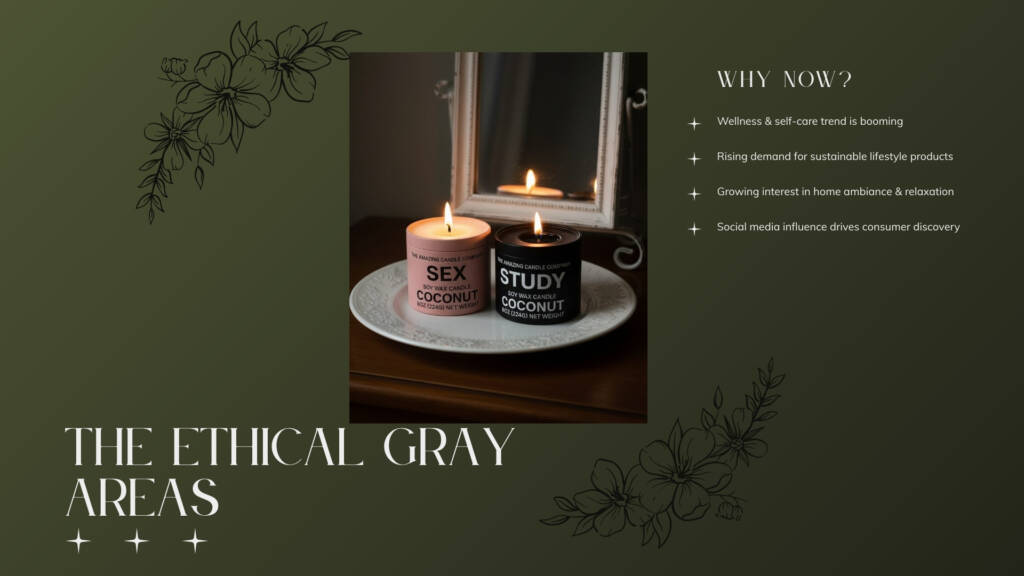
The ethical gray areas: pheromones, euphorics, and fringe ingredients
Some products flirt with controversial ingredients: synthetic pheromones, kratom, or euphoric-promising blends. The problems are twofold:
- Evidence scarcity. Many of these compounds have limited, mixed, or context-specific evidence in humans.
- Regulation and safety. Potent botanicals and synthetic actives may be untested for inhalation; they can cause allergies, interactions, or regulatory headaches.
A best practice for consumers: prefer brands that publish safety data and lab testing, avoid products that promise miraculous cures, and treat any experimental ingredient with healthy skepticism.
Personalization and tech — where the category is heading
Expect to see sophisticated intersections of product and tech:
- Custom scent profiling. Brands may offer questionnaires or AI-driven systems that recommend blends tailored to sleep chronotypes, stress sensitivity, or scent aversions.
- Smart burnout sensors. IoT-enabled candles or vessels that track burn time or automatically extinguish if the candle gets too hot or the room is unsafely dry.
- Modular scent cartridges. Refillable vessels with interchangable scent pods for personalization with less waste.
- Microdosing scent rituals. Short-burst scent formats (call them “snaps” or “nibs”) for focused moments — 10-minute candles designed for single-use rituals.
These innovations will make functional candles more interactive, data-driven, and integrated with broader wellness stacks.
How to choose a functional candle — a buyer’s checklist
- Clear purpose. Does the product clearly state what it’s designed for? (Sleep, focus, intimacy, etc.)
- Transparency. Look for full ingredient lists, source info, and any lab results for added actives.
- Formulation safety. If a candle is marketed for skin use (massage), it must be labeled safe for topical use and ideally have dermatological testing info.
- Burn quality. Look for clean-burning wax, lead-free wick, and reasonable burn time.
- Scent realism. Prefer natural essential oil blends when possible, but don’t assume “natural” equals safer — concentration and exposure matter.
- Ethical & environmental practices. Recyclable packaging, ethical sourcing, and reusable vessels are major pluses.
- Reviews & provenance. User reviews often reveal whether a candle “actually” helps people the way it’s marketed to.
DIY for the curious: making a simple sleep-support candle at home
If you want to experiment, here’s a safe, simple combo:
Ingredients:
- 8 oz soy wax flakes
- 1 oz fragrance/essential oil blend (use high-quality lavender + chamomile + a touch of cedarwood)
- Cotton wick and small glass jar
Method:
- Melt wax in a double boiler.
- When wax is at 55–60°C (130–140°F), remove from heat and stir in oils.
- Center and anchor the wick, pour wax into the jar, let cool.
- Label with a clear “for aromatherapy only — not for skin” note, and always follow safe burning practices: trim wick to 6 mm, don’t burn candles longer than 3–4 hours at a time, keep away from drafts and children/pets.
DIY won’t replace product safety labs, but it’s a great way to understand scent ratios and ritualization.
The future flame: possibilities and responsibility
Functional candles are an elegant example of how ordinary objects can be repurposed into psychosocial tools. As the category matures we’ll likely see:
- Stronger science-backed formulations and clinical studies assessing olfaction-based interventions for specific uses (e.g., short-term sleep onset).
- Clearer regulatory frameworks for botanicals and inhaled actives.
- More sustainable manufacturing: refill systems, better waxes, ethically harvested botanicals.
- Sophisticated personalization and hybrid formats that combine scent with sound, light, and tactile elements for multisensory wellness.
But the future also demands responsibility. Brands should be transparent, avoid overstating benefits, and prioritize consumer safety. Consumers should adopt discernment and integrate candles into broader, evidence-based wellness practices rather than viewing them as magic bullets.
Closing: a small flame, a big promise
If there’s a quiet revolution in daily wellbeing, it’s found in little rituals — the 10 minutes you take to breathe, journal, or light a flame. Functional candles are interesting not because they will replace therapy, sleep hygiene, or medicine, but because they elegantly sit at the intersection of scent science, thoughtful design, and human ritual. When made responsibly and used intentionally, a candle can be more than ambiance: it can be a small, beautiful tool that helps you arrive at a desired state.
Light it, breathe, and notice the change. That’s the simple promise of the future of candles — modest, human, and luminous.